
Walk through your Conroe or Montgomery County home this week and you may have noticed things that do not add up. The water bill is higher than it was in June. A spot on the living room floor feels warm when the rest of the room is cool. The shower takes longer to build pressure. Most homeowners chalk those things up to summer and wait. This year, that wait can cost you.
The late-summer drought is pulling the expansive clay soil that most of Montgomery County is built on away from home foundations. When the soil shrinks, the concrete slab above it can shift and settle. Water pipes running under and through that slab get stressed, and a hairline crack becomes a real leak. Lately, the phrase “slab leak Conroe” has been showing up in more of our service calls than usual, and the reason is right under your feet.
The good news is that slab leaks announce themselves early, usually through your water bill or your floors. If you catch the signs now and get an inspection, a small repair is often all it takes. This guide walks through how the drought works, what to check this week, and what an inspection in Conroe actually involves.
What a Slab Leak Is
A slab leak is a break in one of the water lines that runs under your home’s concrete foundation slab, usually a supply line or a return line. Because those pipes are sealed inside the concrete, you will not see the leak itself. You see what it does to your home: moisture rising through the slab, soft or discolored flooring, a musty smell near the baseboards, and a water bill that keeps climbing.
Slab leaks do not always come from ground movement. Corrosion, a failing pipe joint, and plain age all cause them. But in a dry late summer, ground movement is the trigger to rule out first, because it starts the fastest and hides the longest.
Why the Drought Turns Clay Soil Into a Slab Leak Risk
Most homes in Montgomery County sit on expansive clay. Clay is unique in that it moves with moisture. When it gets wet, it swells. When it dries out, it shrinks and pulls away from whatever is built on top of it.
Over a long, dry stretch like the one we are in now, the soil under your home can shrink noticeably, and the ground drops. The slab settles as the soil beneath it moves. Pipes that were installed with a small amount of flex now bend. Joints loosen. Copper and Pex lines develop hairline cracks.
The movement is slow, so the leak starts small. That is exactly what makes it dangerous. A small supply line leak can feed quietly for weeks, sometimes months, before a homeowner notices anything at all. By then, the water has been running somewhere it should not be, under your home, every single day.
Slab Leak Signs to Check This Week
You do not need a special tool to spot the early signs. Run through these four checks, starting with the water bill, and you will know whether it is time to make a call.
1. A Water Bill Spike That Makes No Sense
Your household did not grow, your usage habits did not change, but the bill did. A slab leak can waste hundreds of gallons a day, and the water company meters every drop.
The fastest test takes two minutes. Turn off every faucet, close the supply valves you can reach, and go look at your water meter. If the meter is still moving with everything in the house off, water is going somewhere it should not be. A spike without a visible leak is the strongest reason to book a slab leak inspection in Conroe.
2. Warm or Damp Spots on the Floor
Hot water supply lines can warm the floor above them. A patch on tile, hardwood, or carpet that feels warm when the rest of the room does not is worth a look, especially in a kitchen, hallway, or laundry room where supply lines run.
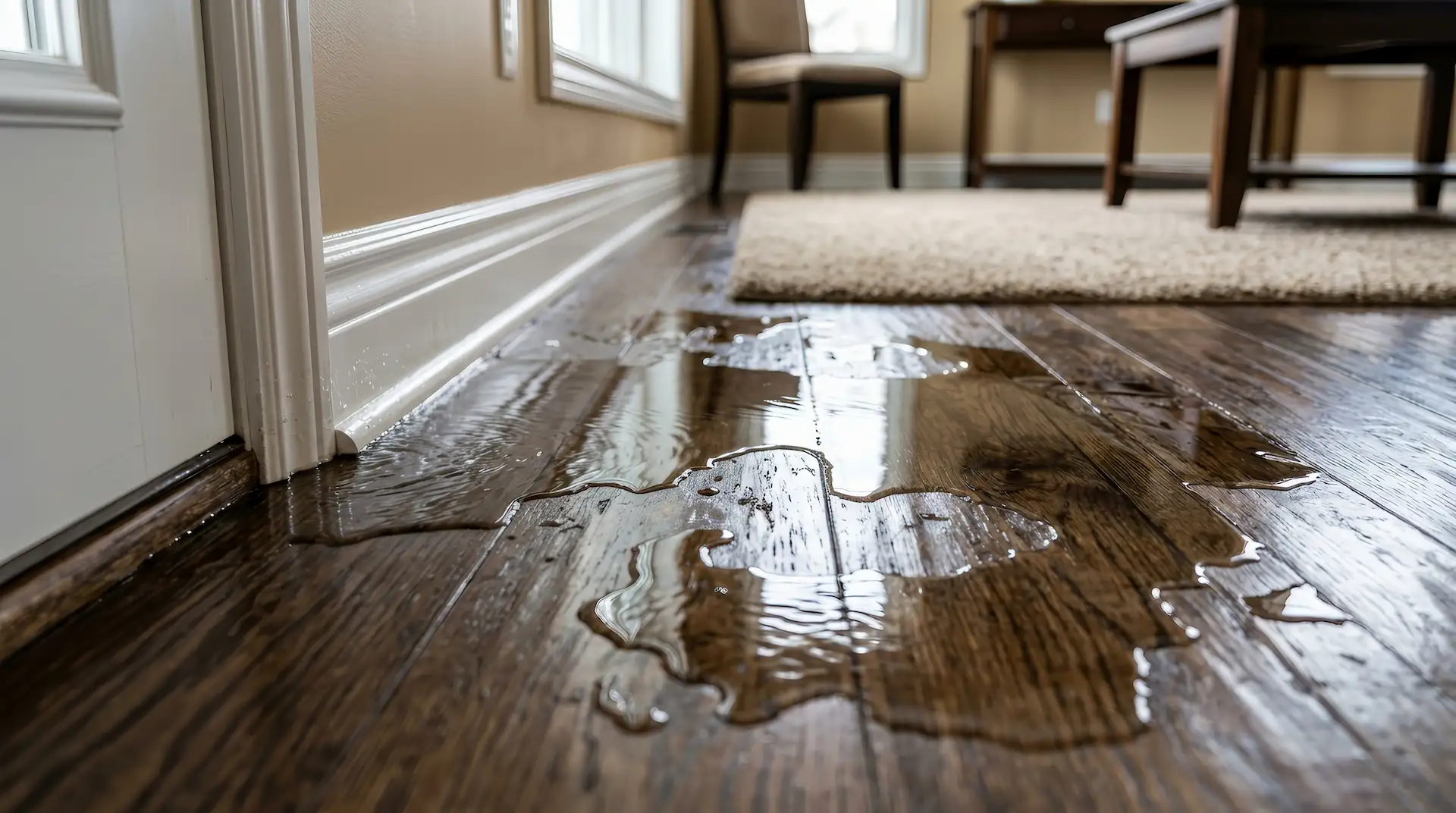
Dampness counts just as much. A soft spot underfoot, a discolored tile, a warped board, or a musty smell near a baseboard all point to moisture working its way up through the slab.
3. A Sudden Drop in Water Pressure
When a line is leaking under the slab, some of your water is feeding the leak instead of your faucets. You feel it as a weak shower, a slow sink fill, or a pressure that was fine on Monday and sluggish by Wednesday. The drop usually shows up first on the side of the house where the break is.
4. The Smaller Tells Worth Noting
A few signs are softer on their own but meaningful in combination. A patch of yard that stays greener than the rest, even in the drought. A hum or gurgle you can hear from under the floor. A room that feels more humid than the rest of the house. None of these means you have a slab leak by itself. Together with one of the three checks above, they are a reason to stop waiting.
Why “Wait Until Fall” Can Get Expensive
Most homeowners assume a slow leak can wait until the weather cools. With a slab leak, the opposite is true.
Water under the slab does not sit still. It wicks into the subfloor, soaks wood framing, and can start mold growth before the floor above ever looks wet. In a bad case, sustained moisture weakens the slab itself and sets the stage for foundation movement that was completely avoidable.
There is a second reason the timing matters. When the fall rains finally arrive, the clay swells and the ground closes back in around the slab. That can quiet a slow leak long enough for the signs to disappear. The damage underneath does not disappear. It waits, and by the time it shows up again, a repair has often become a replacement.
Slab Leak Conroe: What an Inspection Involves
Finding a slab leak without ripping up a kitchen is now routine, and it is the step that keeps the whole thing affordable. Here is how an inspection at Air Tech of Conroe usually goes:
- A visual and meter test, checking for visible moisture, soft flooring, and a meter that keeps moving with the house closed up.
- Acoustic listening, using sensors that pick up the sound of water escaping under the slab.
- Thermal and electronic detection, which narrows the leak to a small area before anything invasive happens.
- A clear scope of work, with the leak location, the repair approach, and the price in hand before any work starts.
Where Air Tech Serves
Our plumbing team works across Montgomery County, including Conroe, Montgomery, Willis, The Woodlands, and Cut and Shoot. If you are anywhere in the county and something in your water bill or your floors does not add up, the Conroe team can get a look scheduled.
If the problem turns out to be something you can see, such as a slow drip behind the sink, a running toilet, or a leaky fixture, our water leak services cover the full range of residential leaks, from the easy ones to the ones hidden under concrete.
Request Your Slab Leak Inspection
Slab leaks reward the homeowner who acts on the first sign, not the last. If your water bill jumped, a floor feels warm, or your pressure dropped for no reason, you have enough to make the call.
Request a slab leak inspection today at 936-225-3417, or send us your details through the contact page and our team will reach out to schedule. The earlier we find the leak, the smaller the repair stays.
Frequently Asked Questions
How does the drought cause a slab leak in Conroe?
Montgomery County soil is mostly expansive clay. When a long dry stretch shrinks that clay, the ground drops and the slab above it settles. The movement stresses the pipes inside and under the slab, and a stressed joint or line can crack. The leak starts small, which is why the water bill and the floor signs show up before any visible damage does.
Can a slab leak damage my foundation?
Yes, if it is ignored. Water under the slab can weaken the concrete over time and set the stage for foundation movement. Early detection is the cheapest protection you have. An inspection can pinpoint the leak before moisture has a chance to do that kind of damage.
Can you find a slab leak without tearing up the floor?
Most of the time, yes. Acoustic, thermal, and electronic detection tools can locate the leak to a small area, so the repair is targeted. That often means a small access point instead of a full floor removal.
How fast should I call after I notice slab leak signs?
Soon as you notice two of the signs together, such as a water bill spike and a warm floor spot. Every week a supply line leak keeps running, hundreds of gallons of water go into the ground under your home instead of into a repair you could price today.
Check the meter this week. It takes two minutes, and it is the difference between a phone call and a renovation.

Why Choose Air Tech of Conroe?

PEACE OF MIND GUARANTEE

30% UTILITY SAVINGS GUARANTEE

$500 INSTALLATION DATE GUARANTEE